Septic Tank Pumping and Cleaning in Milwaukee, WI
Milwaukee-area septic services for homes, businesses, and managed properties
When you need septic tank cleaning and pumping in Milwaukee, WI, you want more than an empty tank—you want to understand what caused the problem, what your service includes, and what happens next. Calat Milwau Plumbing is your local contact for planned maintenance, urgent wastewater concerns, and related residential and commercial plumbing needs.
Our supplied business profile includes 50 professionals, five equipped plumbing service vans, and around-the-clock availability. Tell us your property address, system type, symptoms, and last service date so we can discuss the appropriate service and scheduling.
Not sure whether you have septic or city sewer? Start with that question. A basement backup does not automatically mean a septic tank needs pumping. If you are connected to municipal sewer, ask about drain cleaning or sewer-lateral service.
- Residential and commercial septic-service inquiries.
- Clear discussion of pumping, inspection, and maintenance scope.
- Help distinguishing tank problems from related drain or sewer issues.
- 24/7 contact for urgent plumbing concerns.
Call +1 (414) 279-2050 to discuss availability, access requirements, and a property-specific estimate.
Request Septic Service
Tell us the system type, symptoms, and last service date.
Urgent wastewater concern? Call (414) 279-2050.
Why Choose Calat Milwau Plumbing for Milwaukee Septic Service?
Straight answers before you commit to the work
A wastewater problem can be stressful, especially when you are hoping it requires maintenance rather than a major repair. Our approach starts with listening: what is backing up, when the tank was last serviced, whether an alarm is sounding, and whether problems return after pumping.
Calat Milwau Plumbing’s business profile lists an establishment year of 1990. Our service-page commitment is straightforward communication about the requested work, access conditions, pricing factors, and any additional evaluation your property may need.
Local Milwaukee Contact
Service-area inquiries for Milwaukee and nearby communities — check service areas.
Residential & Commercial
Support for property owners and managers — commercial plumbing.
Routine vs Additional Work
Separate planned pumping from extra repair or evaluation needs.
Scope Discussions
Review access and pricing factors before booking.
Problem-Solving Focus
Discuss next steps if pumping alone may not resolve the issue.
Around-the-Clock Contact
Call about urgent wastewater or plumbing concerns.
Septic and Plumbing Service Across Milwaukee’s Communities
Serving Milwaukee County and surrounding southeastern Wisconsin communities
From properties near the Historic Third Ward and Milwaukee RiverWalk to addresses in Bay View, Riverwest, and Westown, the first question is the same: where does this building’s wastewater go?
Milwaukee’s municipal sewer infrastructure and private wastewater systems require different service approaches. Properties connected to sanitary sewer may need drain cleaning or sewer-lateral evaluation rather than septic pumping. Milwaukee’s private-property sewer program addresses conditions that contribute to basement backups. Learn about Milwaukee’s private-property sewer program.
Milwaukee Communities
- Bay View
- Brewers Hill
- East Town
- Lower East Side
- Walker’s Point
- Westown
Nearby Municipalities & Landmarks
- Shorewood, St. Francis, Wauwatosa
- West Allis and West Milwaukee
- Waukesha, Racine, and Kenosha
- Fiserv Forum and Milwaukee Public Market
- Old World Third Street area and Milwaukee RiverWalk
Provide your address when calling. Location alone does not establish that a property has a septic system. See Milwaukee-area service information.
What Makes Septic Pumping Different From General Plumbing?
Proper servicing requires more than a drain-cleaning machine
Septic servicing involves wastewater removal, tank access, maintenance observations, appropriate equipment, and lawful handling of the removed material. A plumbing service van and a septic pumping truck perform different jobs.
Wisconsin requires septage-servicing businesses to hold the appropriate business license and use personnel meeting applicable operator-certification requirements. General plumbing credentials should not be confused with authorization to service and dispose of septage. Wisconsin DNR septage business and operator requirements.
Questions to Discuss When Arranging Service
- Who will perform the pump-out?
- What equipment does the appointment require?
- Are inspection and outlet-filter cleaning included?
- Which tank compartments and openings are covered?
- Are maintenance records part of the booked work?
Clarity helps you compare services by actual scope rather than a headline price. For plumbing work beyond the septic system, see commercial plumbing or drain cleaning.
What Happens When a Septic System Stops Working Properly?
Backups, odors, and wet ground deserve prompt attention
Your septic tank separates solids from wastewater before liquid moves onward through the system. When accumulated solids are not removed when needed, sludge or scum can obstruct the outlet or reach the soil absorption area, contributing to costly failure. Poorly maintained outlet filters can also cause backups. Wisconsin DSPS POWTS maintenance guidance.
However, a slow drain or sewage odor does not identify the cause by itself. The problem may involve the building drain, tank, filter, pump components, or wastewater dispersal area.
Multiple Slow Fixtures
Describe whether several fixtures drain slowly or back up together.
Indoor Sewage Backup
Report where wastewater appears and when it began.
Wet Ground Near the System
Surface wastewater needs prompt professional attention.
Persistent Odors
Odors are a symptom, not a diagnosis.
System Alarm
Tell us which alarm is sounding and when.
Problem Returns After Pumping
Discuss the previous service before arranging another pump-out.
Tell us when the symptom started and whether recent rainfall, increased occupancy, or unusual water use coincided with it. If sewage is present, keep people and pets away and avoid direct contact.
How Often Does Your Septic System Need Inspection or Pumping?
Wisconsin maintenance notices do not mean every tank needs the same schedule
An annual check may suit some systems, but annual pumping or certification is not a universal requirement. Wisconsin DSPS guidance distinguishes visual inspection from pumping: systems must be visually inspected at least every three years, while anaerobic treatment tanks require servicing when combined sludge and scum reach one-third of tank volume. Property-specific requirements still matter. Wisconsin DSPS maintenance brochure.
Alternative systems with pumps, float switches, or mechanical components may need more frequent inspection; EPA guidance generally recommends annual inspection for these systems. EPA septic-system care guidance.
Maintenance Tasks
| Maintenance Task | What It Addresses | Typical Timing | Value |
|---|---|---|---|
| Records review | Last service, maintenance notice, system information | Before booking | Establishes what is due |
| Visual inspection | Accessible condition and maintenance concerns | According to applicable requirements | Identifies issues needing attention |
| Sludge and scum assessment | Accumulated solids | During appropriate servicing or inspection | Helps determine pumping needs |
| Tank pumping | Removal of contents | Based on system needs and requirements | Limits excessive solids accumulation |
| Outlet-filter cleaning | Filter maintenance | When tank is serviced, where applicable | Helps prevent restriction and backups |
| Service records | Work completed and observations | Following appointment | Supports maintenance tracking |
Seasonal Scheduling
- Arrange planned maintenance before difficult winter access develops.
- Review servicing needs before increased occupancy or seasonal use.
- Allow time to address a maintenance notice before its deadline.
- Coordinate commercial appointments around operating schedules.
Pricing & Preparation
Costs depend on tank size, access, service scope, and additional work. Keep previous records, tell us about buried lids, and discuss safe access before the appointment.
Who Needs Septic Tank Service in the Milwaukee Area?
Homeowners, rental owners, and commercial property managers
Calat Milwau Plumbing welcomes inquiries from property owners who need help understanding their system, planning maintenance, or responding to a wastewater problem. The determining factor is the property’s wastewater arrangement—not simply whether it is a house, restaurant, church, or warehouse.
Homeowners
For properties with private septic systems.
New Property Owners
Understand existing system records and maintenance history.
Landlords
Coordinate maintenance at septic-served rentals.
HOAs & Property Managers
Oversee shared or private wastewater systems.
Businesses
Arrange inquiries for septic-served locations.
Holding-Tank Properties
Discuss removal needs based on wastewater accumulation.
Have a municipal sewer connection instead? Ask about the appropriate drain service or commercial plumbing support.
How Do Wisconsin Weather and Water Use Affect Septic Performance?
Winter access, wet ground, and changing demand all matter
A system that performs adequately under normal conditions may experience trouble when water use increases or the surrounding ground is saturated. EPA advises directing roof runoff, sump-pump discharge, and other drainage away from the drainfield because excess water can slow or stop wastewater treatment. EPA septic-system care.
Cold-weather conditions introduce separate concerns, including freezing and difficult access. A frozen system needs professional assessment; a pump-out is not automatically the solution. Winter-weather guidance.
Mention weather-related patterns when you call. “It only backs up after heavy rain” is useful information. Related water-management concerns may involve sump-pump service or water-damage restoration.
Septic Tanks, Mound Systems, Pump Tanks, and Holding Tanks
Different configurations require different service conversations
A septic system is more than its tank. Understanding the basic configuration helps establish what needs maintenance and what a pumping appointment can reasonably accomplish.
| System or Component | Function | Main Service Consideration |
|---|---|---|
| Septic tank with drainfield | Separates solids before wastewater moves to soil treatment | Solids accumulation, outlet condition, and field performance |
| Mound system | Uses an elevated soil-treatment arrangement | Tank care and system-specific components |
| Pump tank | Moves wastewater using a pump | Pump, controls, and maintenance requirements |
| Holding tank | Stores wastewater for removal by a hauler | Frequent removal according to wastewater accumulation |
| Effluent filter | Restricts solids leaving the tank | Cleaning and accessible condition |
Holding tanks do not have a drainfield. They store wastewater until a liquid-waste hauler removes it, so their servicing pattern differs from a septic tank connected to a soil absorption system. Wisconsin DSPS maintenance guidance.
Have your system drawing, previous invoice, or maintenance notice available when possible.
Our Six-Step Septic Service Planning Process
What to expect when arranging your appointment
Initial Call & Property Assessment
Share your address, symptoms, system type, last service date, and maintenance notice.
Access & Scope Planning
Discuss tank location, openings, truck approach, hose access, and separately priced locating or excavation.
On-Site Assessment
The servicing professional evaluates accessible conditions within the booked scope.
Pumping & Agreed Maintenance
The appointment covers work specified in your quote; additional maintenance is performed only as agreed.
Findings & Documentation
Review work completed, observed concerns, and recommended further evaluation.
Next-Service Guidance
Keep your records and plan future maintenance according to system requirements.
If the tank was recently pumped but problems continue, mention that before scheduling another pump-out. The next step may involve a different service such as drain cleaning or system evaluation.
What Is Included in a Septic Pumping Appointment?
Pumping, filter care, inspection, and repairs are not interchangeable
“Septic tank cleaning” and “septic pumping” often appear together in service requests. The important question is what work the appointment includes.
Use the Written Scope to Establish:
- Which tank and compartments will be serviced.
- Whether accessible condition observations are included.
- Whether sludge-and-scum assessment forms part of the work.
- Whether outlet-filter cleaning is included.
- Whether locating or uncovering buried openings costs extra.
- What receipt or maintenance records you receive.
- Whether required reporting is included.
- Which repairs require separate authorization.
Separate Services May Be Needed
Pumping does not automatically include sewer-camera inspection, excavation, pump replacement, drainfield repair, or a comprehensive property-transfer evaluation.
For related plumbing issues, see sewer-camera inspection, sewer-line repair, or sump-pump service.
Clear Scope and Practical Support for Septic Owners
Understand the appointment and the next steps
The most valuable service experience leaves you knowing what was done and what still needs attention. Calat Milwau Plumbing’s service approach centers on understandable conversations about wastewater problems and related plumbing needs.
Symptom-First Intake
Discuss the actual symptoms instead of assuming every concern needs pumping.
Septic vs Municipal Sewer
Distinguish private wastewater systems from city sewer connections.
Access & Pricing Discussion
Review known cost factors before booking.
Residential & Commercial
Property-owner and business service inquiries — commercial plumbing.
Records & Notices
Discuss maintenance notices, previous records, and follow-up.
Local Phone Contact
Reach us about urgent concerns and planned appointments.
Need commercial plumbing in Milwaukee alongside wastewater maintenance? Include related drain, fixture, or water-use problems in your initial call.
What Should Change After Septic Service?
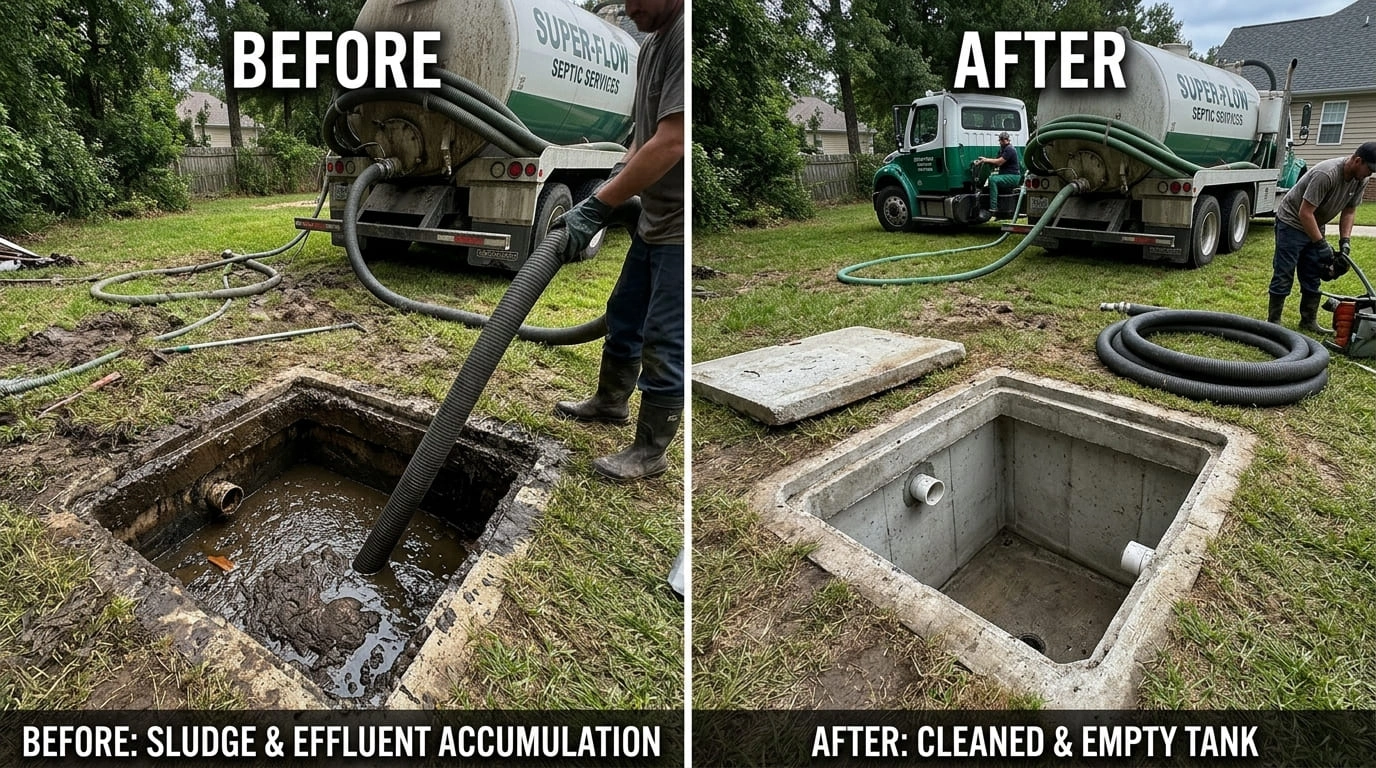
A Good Appointment Produces Clarity as Well as Completed Work
The outcome should match the work performed. Pumping can address accumulated tank contents, but it does not by itself prove that every pipe, pump, or drainfield component is functioning correctly.
- Before: Uncertain service history. After: A record of the completed appointment.
- Before: Unclear quote. After: An understood scope and itemized charges.
- Before: Confusion about tank condition. After: Observations within the inspection scope.
- Before: Repeated symptoms without a plan. After: Recommended next steps where further investigation is needed.
Ask for an explanation you can understand—not simply “the tank is empty now.”
How Is a Septic Tank Properly Serviced?
Safe access, appropriate pumping equipment, and responsible handling
Tank servicing requires access suitable for the work, equipment capable of removing tank contents, and lawful handling of septage. Wisconsin regulates businesses that service or dispose of material from septic tanks, holding tanks, and other covered systems. Wisconsin DNR septage requirements.
EPA advises against parking or driving on drainfields because vehicle weight can compact soil and damage components. EPA septic care guidance.
Do You Need Pumping, a Repair, or Further Septic Evaluation?
Match the solution to the cause—not just the symptom
If trouble returns after pumping, ask why before repeating the same service. A restriction, excessive water input, mechanical fault, or wastewater dispersal problem may require additional assessment.
| Situation | Pumping Consideration | Additional Action |
|---|---|---|
| Excessive accumulated solids | May be appropriate | Review future maintenance needs |
| Suspected outlet-filter restriction | Pumping alone may not address it | Assess and service the filter |
| Pump or control concern | Pump-out may not restore operation | Evaluate mechanical components |
| Structural tank damage | Does not repair the structure | Professional repair or replacement evaluation |
| Persistent wastewater surfacing | May offer limited or temporary relief | Investigate system performance |
| Trouble shortly after servicing | Do not assume solids are the cause | Review water use and system conditions |
Replacement decisions should follow a competent evaluation of condition, repair options, and applicable requirements—not the assumption that an older system must be replaced. For municipal sewer connections, see sewer-lateral service.
How Much Does Septic Tank Pumping Cost in Milwaukee?
Access, capacity, and service scope determine your estimate
There is no useful one-price answer for every property. A clearly accessible tank with a known location differs from a buried system requiring locating, excavation, or additional work.
Details to Have Ready
- Approximate tank capacity and number of compartments
- Tank location and whether openings are accessible
- Distance and obstacles between equipment access and tank
- Last service date
- Routine or urgent request
- Filter cleaning, inspection, or reporting needs
- Symptoms that may require separate diagnosis
Request a Property-Specific Estimate
Ask whether the quote includes all agreed work and what circumstances could change the price.
Call (414) 279-2050 for an EstimateDiscuss tank size, access, and service scope.
| Service Request | Estimate Considerations |
|---|---|
| Routine tank pumping | Capacity, compartments, access, and removal scope |
| Pumping with maintenance inspection | Inspection scope and required records |
| Buried-lid service | Locating and excavation, if offered |
| Holding-tank removal | Contents, access, and servicing arrangement |
| Urgent service | Scheduling and equipment availability |
| Repairs or component replacement | Diagnosis, parts, labor, and separate authorization |
Ask whether the quote includes all agreed work, and what conditions could change the price. Locating, uncovering, excavation, and additional system evaluation may be separate.
When Should You Arrange Septic Inspection or Pumping?
Maintenance notices, uncertain records, and recurring symptoms
Planned service is appropriate when your system’s maintenance requirements are due. An inspection can help establish what is needed when records are missing or you are unfamiliar with the property.
Wisconsin counties track POWTS maintenance, issue reminders, and follow up on overdue properties. Owners remain responsible for maintaining their systems. Wisconsin DSPS POWTS guidance.
Maintenance Notice
Understand what your notice requires and when.
Missing Service Record
Clarify history for a property you own or manage.
Assessment Indicates Need
Arrange service based on professional findings.
Changed Occupancy
Discuss increased use or wastewater generation.
Holding-Tank Alarm
Arrange servicing based on accumulation and access.
Problem Returns
Share details if symptoms continue after service.
Active sewage backup or wastewater surfacing calls for prompt assessment rather than waiting for the next routine date.
Commercial Septic Tank Pumping in Milwaukee
Service planning for qualifying commercial and multi-unit properties
Businesses using private wastewater systems need appointments that account for access, occupancy, operating hours, and site responsibilities. Calat Milwau Plumbing welcomes commercial septic-service inquiries alongside broader commercial plumbing maintenance needs.
| Service Need | Planning Focus |
|---|---|
| Scheduled servicing | System requirements and operating schedule |
| Multiple tanks or buildings | Identification, access, and individual scope |
| Maintenance records | Clear work descriptions and reporting arrangements |
| Related plumbing problems | Leaking fixtures, drainage concerns, and excess water use |
| Further evaluation | Separate investigation when pumping does not explain the problem |
Potential Commercial Clients
- Septic-served rental properties
- Hospitality locations
- Community facilities
- Business premises
- Managed sites
Property-Specific Planning
- Coordinate around operations
- Identify multiple tanks or buildings
- Confirm records and reporting
- Define further evaluation separately
| Property Arrangement | Appointment Consideration |
|---|---|
| Occupied rental property | Tenant communication and access |
| Business with busy periods | Schedule around operations |
| Multiple buildings | Tank identification and phased appointments |
| Controlled-access facility | Site permissions and safety procedures |
Commercial plumbing services can complement wastewater maintenance when running toilets or other plumbing faults add unnecessary water to the system. EPA identifies excessive water input as an important septic-performance concern. EPA care recommendations.
Why Hire a Professional for Septic Tank Service?
Equipment, judgment, and records matter
Professional servicing combines appropriate equipment with an understanding of maintenance needs and safe handling. It also gives owners a chance to address concerns before they become repeated emergencies.
Appropriate Removal
Remove accumulated contents when servicing is needed.
Accessible Observations
Identify maintenance concerns within the agreed scope.
Filter Maintenance
Address outlet-filter cleaning where applicable.
Useful Service History
Keep records for future maintenance decisions.
Know When to Investigate
Understand when further evaluation is necessary.
Plan Future Maintenance
Use system requirements rather than assumptions.
Regular maintenance helps prevent solids from moving into the soil absorption area and contributing to premature failure. It is not a guarantee against every future problem. Wisconsin DSPS guidance.
Why Is DIY Septic Work Dangerous?
Treat sewage, openings, and confined spaces as serious hazards
Septic work involves exposure to wastewater, hazardous atmospheres, and fall risks. Tank entry is not a homeowner maintenance task. Leave opening, servicing, and securing the system to appropriately trained professionals.
If sewage is backing up or surfacing:
For a frozen system, seek professional assistance rather than attempting to thaw it with fire or improvised chemicals. Winter guidance advises calling a septic professional. Winter weather guidance.
Septic Tank Cleaning and Pumping FAQs in Milwaukee
Understand your system before choosing the next service
Is my Milwaukee house on septic or city sewer?
Check property records, wastewater billing information, and available system documents. A private well does not automatically mean septic: Milwaukee publishes guidance for sewer users who obtain water from private wells. Milwaukee well and sewer information.
How do I know my tank needs pumping?
Useful indicators include maintenance history, system requirements, and a professional assessment of accumulated solids. Symptoms alone do not establish that pumping is the correct remedy. DSPS maintenance guidance.
Why is my tank full again after pumping?
A septic tank normally contains wastewater during operation. Seeing liquid again does not necessarily mean it is full of sludge. Continued backups, unusually high levels, or water returning from downstream deserve assessment.
Does Wisconsin require pumping every three years?
Not as a universal rule. DSPS distinguishes the three-year visual-inspection requirement from pumping based on solids accumulation and applicable system needs. See Wisconsin guidance.
Can an inspection satisfy my maintenance notice?
It may, depending on the notice, system requirements, and findings. Read the notice and ask what inspection, servicing, and reporting are required for your property.
Will pumping fix wastewater leaking into my yard?
Not necessarily. Pumping may be part of the response, but the source and condition need evaluation. Do not assume a pump-out repairs a damaged tank or poorly performing drainfield.
Does pumping include outlet-filter cleaning?
Ask specifically. Wisconsin guidance says filters should be cleaned when the tank is serviced, but your appointment’s written scope should state whether the task is included. DSPS maintenance brochure.
Do I need to uncover the lid?
Discuss that before booking. Tell us whether the opening is buried, whether its location is known, and whether locating or excavation is needed. Do not open or handle unsafe covers yourself.
Can a running toilet affect my septic system?
Yes. It adds water that the system must handle. EPA recommends fixing leaks and spreading laundry loads through the week to avoid unnecessary wastewater surges. EPA septic care guidance.
Can service be arranged in winter?
Winter appointments depend on safe access, equipment availability, and the actual problem. A frozen system requires a different assessment from routine solids removal.
Is a holding tank the same as a septic tank?
No. A holding tank stores wastewater for removal and does not have a drainfield. Its servicing frequency follows wastewater accumulation rather than an ordinary septic-pumping interval. Wisconsin DSPS information.
Does a pumping receipt prove the whole system works?
No. It documents the work described on the receipt. A comprehensive evaluation is a separate scope.
Our Septic Service Commitment
Understand the work, the price, and the limits of the appointment
Calat Milwau Plumbing’s service commitment centers on straightforward communication. You should understand the service being arranged, any access concerns, and whether additional diagnosis or repairs require separate authorization.
A pump-out should not be presented as a guarantee that every wastewater problem will disappear. If concerns continue, keep the service record and explain exactly what has changed.
Discuss any applicable written guarantee or workmanship terms before authorizing repair or replacement work.
Which Qualifications Matter for Wisconsin Septic Servicing?
Septage credentials and plumbing licenses serve different purposes
Wisconsin regulates septage-servicing businesses and operators. The DNR requires covered businesses to hold a septage business license and designate an operator-in-charge; operator qualifications depend on the work performed. Wisconsin DNR business and operator requirements.
Septage Business Authorization
Business licensing applicable to covered servicing and disposal work.
Septage Operator Certification
Operator qualification applicable to the work performed.
Operator-in-Charge
Responsible role required under applicable DNR rules.
Master Plumber
Credential relevant to applicable plumbing work.
Journeyman Plumber
Credential relevant to applicable plumbing work.
When booking, ask who will perform the specific work and how their qualifications match the appointment. Registered-apprentice status should not be treated as independent authorization to perform every service.
Emergency Septic and Wastewater Concerns in Milwaukee
Call 24/7 to discuss backups, alarms, and urgent plumbing problems
Calat Milwau Plumbing lists around-the-clock business availability. Call when sewage backs up, wastewater surfaces, or a system alarm raises concern. Phone availability, technician dispatch, and pumping-equipment availability are separate parts of arranging a response.
Our Intake Conversation Should Establish:
- Whether people or property are exposed to wastewater.
- Whether the system is septic, holding-tank, or sewer-connected.
- What is backing up and when it started.
- Whether the tank was recently serviced.
- Whether safe access is available.
- What service can be scheduled and when.
Urgent scenarios include sewage entering a building, wastewater escaping onto occupied areas, damaged covers, and unresolved alarms. Keep people away from sewage and do not enter a tank.
24/7 Plumbing Contact
Call to discuss wastewater concerns, symptoms, and service availability.
Call +1 (414) 279-2050Dispatch and specialty equipment depend on the service needed.
Documentation for Septic-Related Property Damage
Keep the service record separate from the insurer’s coverage decision
If a wastewater incident damages your property, documentation may help explain the work performed. Coverage depends on your policy, exclusions, endorsements, and the circumstances of the loss.
Inspection Observations
Within the scope of the service performed.
Photographs
Where appropriate and available.
Itemized Invoices
Details of authorized service.
Repair Descriptions
Work performed and related parts.
Further Recommendations
Records of additional evaluation advised.
Keep your own incident timeline and contact your insurer promptly for policy-specific guidance. A contractor’s invoice does not establish claim approval, and a routine maintenance receipt does not necessarily establish the cause of damage. Related restoration may involve water-damage restoration.
Warranty Terms for Septic Repairs and Related Plumbing Work
Pumping, workmanship, and manufacturer coverage are different
Warranty terms should describe the specific work or product covered. Ordinary pumping is not the same as installing a component, and it should not be interpreted as a warranty on the entire septic system.
| Coverage Category | What to Ask |
|---|---|
| Pumping-service terms | What work was agreed and how are concerns handled? |
| Repair workmanship | What labor, period, exclusions, and remedy apply? |
| Installed components | What manufacturer terms and registration requirements apply? |
| Further system problems | Are unrelated faults outside the original scope? |
| Records | What documentation should be retained? |
Request written terms before proceeding with repairs or replacements. Do not assume a warranty extends to pre-existing conditions or components that were not serviced.
Plumbing Fleet and Septic Service Equipment
Five equipped service vans support the supplied plumbing operation
Calat Milwau Plumbing’s business profile lists five equipped plumbing service vans. Those vehicles support plumbing work; they should not be confused with vacuum trucks used for septic pumping.
When arranging a pump-out, discuss:
- The equipment assigned to the job and the servicing provider.
- Truck approach and hose access.
- Obstacles, gates, and overhead clearance.
- Ground conditions and protection of the drainfield.
- Landscaping, narrow driveways, buried openings, and site restrictions.
Good access planning can reduce avoidable delays. Share site details before the visit.
Business Profile
Septic pumping requires suitable septage equipment and properly qualified service arrangements. Ask what equipment is assigned to your appointment.
Discuss Equipment & AccessPayment Planning for Larger Septic and Plumbing Projects
Start with a written scope and itemized estimate
Routine service and major repair projects involve different budgets. If evaluation identifies substantial work, ask about payment arrangements before authorizing it.
Deposit & Balance
Ask about payment timing and accepted methods.
Staged Work
Discuss whether staged service is technically appropriate.
Financing Availability
Ask whether an option is available for your specific project.
Review fees, repayment terms, and eligibility if financing is offered. No payment plan should replace a clear explanation of the work. Compare the full project cost—not only a monthly amount.
Recognition and Service Standards
Look beyond award language to the appointment itself
Awards can provide context, but they do not replace the right equipment, clear scope, or relevant credentials. For septic service, the practical questions remain: who performs the work, what is included, and what records will you receive?
Identified Award
Look for the award name and year.
Named Recipient
Confirm the business receiving recognition.
Relevant Category
Check whether the recognition relates to the service.
Clear Criteria
Understand what the recognition represents.
For Septic Service, Ask:
- Who performs the work?
- What equipment and credentials apply?
- What does the service scope include?
- What records will be supplied?
Service should stand on understandable work descriptions and customer-focused communication—not an assumption that an award guarantees every outcome.
Septic Service Discounts and Special Offers
Clear eligibility matters more than a vague promotional headline
Call to ask whether an offer applies to your requested service. Senior, military, or veteran pricing should not be assumed unless a current offer is available.
The supplied business profile lists first-time-customer and other plumbing promotions. Their applicability to septic appointments should be established when requesting an estimate.
Ask About Current Offers
Confirm the promotion, exclusions, and final price before booking.
Call (414) 279-2050Calat Milwau Plumbing Service Hours in Milwaukee
24/7 contact for plumbing emergencies and service inquiries
Call any day to discuss an urgent problem or request a planned appointment. Specific septic-servicing availability depends on the service required, access, and equipment scheduling.
| Day | Listed Business Hours |
|---|---|
| Monday | Open 24 Hours |
| Tuesday | Open 24 Hours |
| Wednesday | Open 24 Hours |
| Thursday | Open 24 Hours |
| Friday | Open 24 Hours |
| Saturday | Open 24 Hours |
| Sunday | Open 24 Hours |
Call Before Visiting
Call before visiting the listed address.
Phone availability does not by itself confirm septic pumping equipment or same-day dispatch. Confirm the service arrangement when calling.
How Should You Compare Milwaukee Septic Service Providers?
Ask the same scope questions before comparing prices
A lower price may cover less work; a higher price may include access preparation, filter maintenance, or reporting. Compare written scopes rather than assuming every provider offers the same appointment.
| Comparison Point | Ask Calat Milwau Plumbing | Ask Any Other Provider |
|---|---|---|
| Servicing provider | Who performs the pump-out? | Who performs the pump-out? |
| Relevant credentials | What authorizations apply? | What authorizations apply? |
| Equipment | What equipment is assigned? | What equipment is assigned? |
| Tank coverage | Which compartments are included? | Which compartments are included? |
| Filter maintenance | Is it included or additional? | Is it included or additional? |
| Access charges | Are locating or excavation separate? | Are locating or excavation separate? |
| Records | What documentation is supplied? | What documentation is supplied? |
| Reporting | Is any required submission included? | Is any required submission included? |
| Urgent availability | What can be scheduled and when? | What can be scheduled and when? |
Choose based on fit, clarity, and appropriate qualifications—not unsupported claims about a “typical competitor.”
Contact Calat Milwau Plumbing for Septic Service in Milwaukee
Tell us what is happening and what system you have
Whether you received a POWTS maintenance notice, cannot find your last service record, or are dealing with wastewater backing up, start with a conversation.
Have your property address, system type, last service date, symptoms, and access information ready. If you are unsure whether the building uses septic or city sewer, say so—we can begin with the appropriate service discussion rather than assuming a tank needs pumping.
Septic Service Contact
+1 (414) 279-2050
Septic Tank Cleaning & Pumping
836–838 N Old World 3rd St, Milwaukee, WI 53203, USA
Helpful Details for Your Call
- Property address and system type
- Symptoms and when they started
- Last service date and maintenance notice
- Access details and buried tank openings
Contact Calat Milwau Plumbing to discuss septic tank cleaning and pumping in Milwaukee, WI, with a clear scope, practical answers, and a service plan suited to your property.
Request Septic Service
Include your system type, service history, symptoms, and access information.
Septic and Plumbing Service-Area Inquiries
Ask about appointment availability for your property. Location alone does not determine whether a home uses a private septic system. View service areas.